Sewage cleanup
Toilet, tub and floor-drain backups are Category 3 water and need containment and protective gear. See sewage cleanup in Frisco.
If you need water damage restoration in Frisco, one call connects you with an independent restoration company that handles water removal, extraction and structural drying. The sooner standing water comes out, the less soaks into drywall, cabinets and subfloor.
Your call goes to an independent restoration company that serves Frisco.
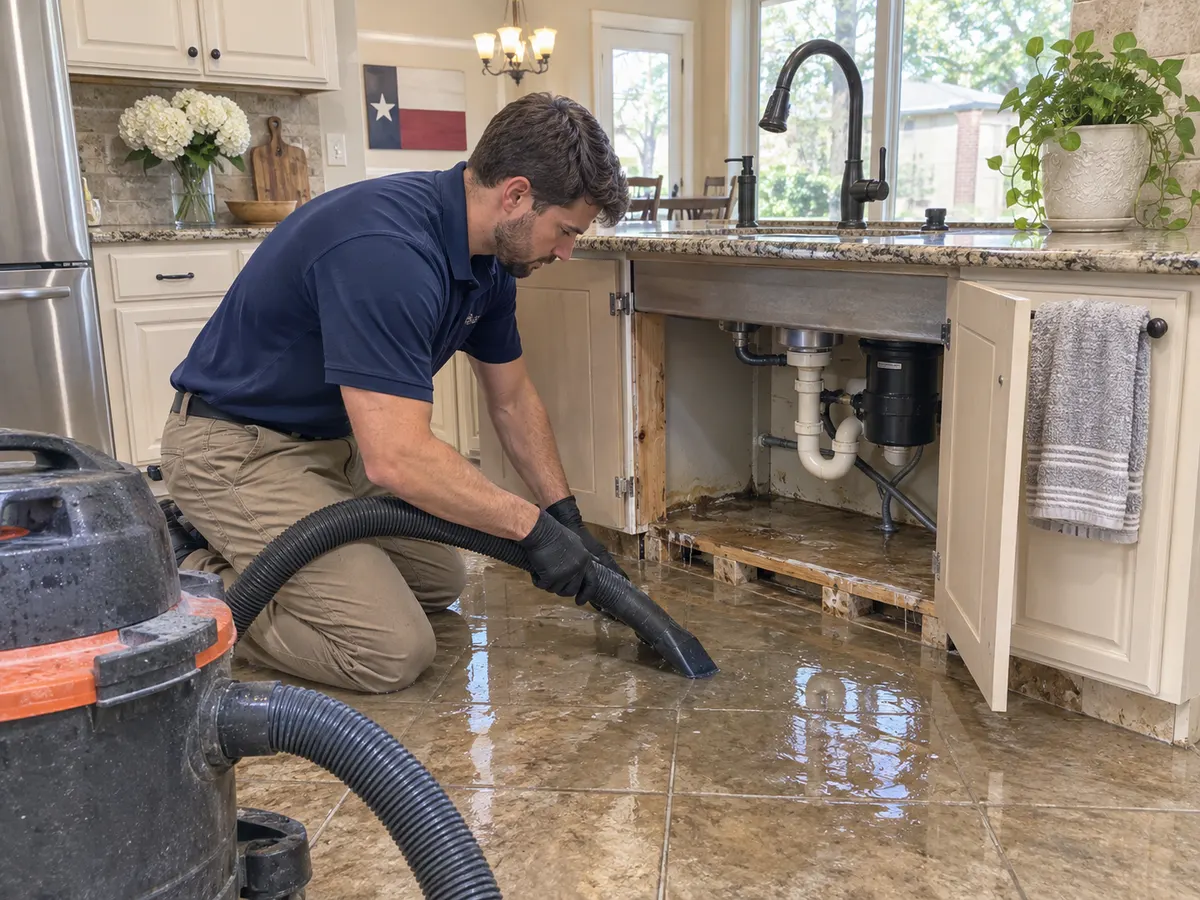
Water extraction is the first job on any Frisco water damage call. Standing water comes out first (EPA), then wet carpet pad, then anything that cannot be dried in place. Pulling water mechanically is far faster than waiting for it to evaporate.
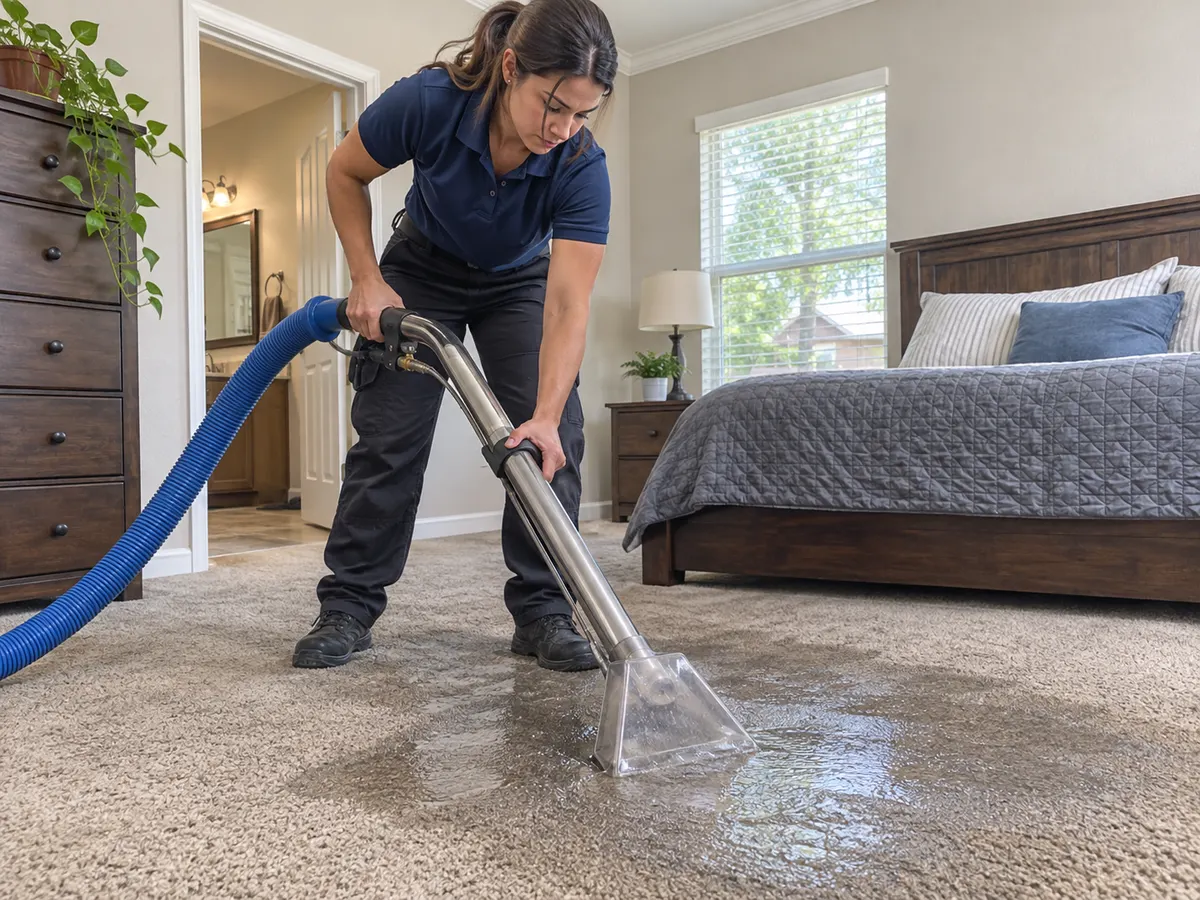
Drying is where water mitigation succeeds or fails. The EPA advises drying wet areas and items within 24 to 48 hours (EPA), and the CDC recommends fans, air conditioning units and dehumidifiers to speed drying (CDC). Indoor humidity should stay below 60 percent while the house dries out (EPA).
These kinds of water damage call for their own approach in Frisco:
Toilet, tub and floor-drain backups are Category 3 water and need containment and protective gear. See sewage cleanup in Frisco.
Homes on pier-and-beam foundations can hold water under the floor. See crawl space water removal in Frisco.
Rising water from a creek or river is one of the IICRC’s examples of Category 3 water. See flood restoration in Frisco.
Water coming in right now: shut-offs, electrical safety and the first hour. See emergency water removal in Frisco.
A split supply line can release a lot of water fast. See burst pipe water damage in Frisco.
What to clean, what to keep and what to throw out once the water is gone. See water damage cleanup in Frisco.
How a crew finds where the water went and sets drying goals. See water mitigation in Frisco.
Pumping and extracting standing water from carpet and hard floors. See water extraction in Frisco.

About Frisco
Housing in Frisco is young by Dallas-area standards: the median home was built in 2009, and 47% of units went up in 2010 or later (U.S. Census Bureau, ACS 2020-2024). 69% of housing units in Frisco are detached houses and 21% are in buildings with 20 or more units (U.S. Census Bureau, ACS 2020-2024). In stacked units, a leak upstairs can reach the unit below before anyone notices. Frisco is one of the North Texas Municipal Water District’s member cities for treated water (NTMWD). Clay soil is one reason Dallas-area homes are rarely built with basements (Dallas Morning News), so water that gets in usually spreads across the slab or collects in a crawl space instead of draining to a lower level.
Close by: Little Elm, The Colony and Hebron. All Collin County towns are listed on the Collin County page.
Water outside your property line may be a utility main, not a plumbing leak. Frisco Utility Billing can be reached at 972-292-5575, weekdays 8 am to 5 pm; its listed number for water emergencies and after-hours problems is 972-292-5800 (Frisco Utility Billing).
The EPA says wet areas and items should be dried within 24 to 48 hours (EPA).
Yes. 47% of homes in Frisco were built in 2010 or later (U.S. Census Bureau, ACS 2020-2024), and new homes have the same supply lines, water heaters and appliance hoses that fail in older ones.
No. 214 Damage is a referral service. Your call connects you with an independent restoration company that serves Frisco.
One call connects you with an independent restoration company for water removal and drying.
Call (844) 609-3969